Platform / The governance core

Remediation

Actions raised in four places end up tracked in four places, and closed comes to mean whatever the person closing it decided. Here every open action is in one view, and closing one takes two people.

Every open remediation action in one view, and a closure waiting for its second person A drawn view of the platform. Four tiles count the actions that are open, on track, overdue and awaiting closure approval. Beneath them, four actions, each showing where it came from, its owner, its due date and its status. On the right, one closure request: raised by the owner, awaiting approval from a second-line person who is not the requester, with a note that the requester cannot approve their own closure. Connected risk intelligence All entities (Group) Dashboard Risk register Risk assessments Controls Control assessments KRI register KRI collection Breaches Risk events Remediation Committee packs Audit log MODULES TPRM & Supplier DD Obligations Management ICARA Operational Resilience Customer Oversight Portal RMRisk manager Remediation Every open action across the organisation · breaches, events, control failures and quality findings Log an action Open32 On track24 Overdue3 Awaiting a second person5 ACTIONSOURCEOWNERDUESTATUS Clear reconciliation backlog and fix the daily cut-off Breach IO 30 Sep Closing Re-perform quarterly access recertification Control failure SL 14 Oct On track Assign an owner to the two risks without one Quality finding RM 7 Oct On track Root cause review of the near miss on 12 Aug Risk event CO 2 Sep Overdue Each action links back to what caused it. Closing one takes two people. There is no one-click close and no one-click cancel. Closure request Clear reconciliation backlog and fix the daily cut-off IO Requested by the owner 2 Sep · work complete, evidence attached ? Awaiting a second person second line, and not the requester You requested this closure, so you cannot be the one to approve it. Approve refused for this user

Drawn from the platform.


What changes

Actions arrive from breaches, risk events, control failures and quality findings, each linked back to its cause. One view shows every open action across the organisation, and closed means two people agreed it was.

Four sources feed one remediation action, which two people close Four boxes on the left, threshold breach, risk event, control failure and quality finding, each with an arrow into a central box labelled remediation action with an owner and a due date. On the right, one person requests closure and a different person approves it, and a green closed mark sits beneath them. Threshold breach Risk event Control failure Quality finding Remediation action owner · due date linked to its cause requests closure approves not the requester Closed
Four sources feeding one view, with no one-click close.

In detail

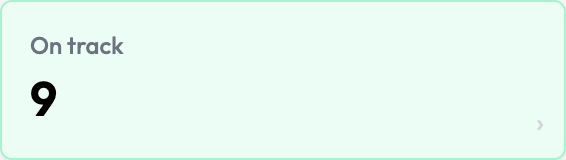
A summary tile from the remediation view in the demonstration organisation showing the count of actions on track
One of the summary tiles on the remediation view. Demonstration data.

Actions arrive from four sources (indicator breaches, risk events, control failures and quality findings), each links back to its cause and one view shows every open remediation across the organisation.

Closing an action takes two people. The owner or a risk manager requests closure, and somebody in an oversight role who is not the requester decides. There is no one-click close and no one-click cancel, so "closed" means two people agreed it was, and the record shows which two.

The evidence it leaves behind

Both halves of a closure are audit entries, each with a name, a role and a line of defence. Segregation of duties, enforced rather than asserted